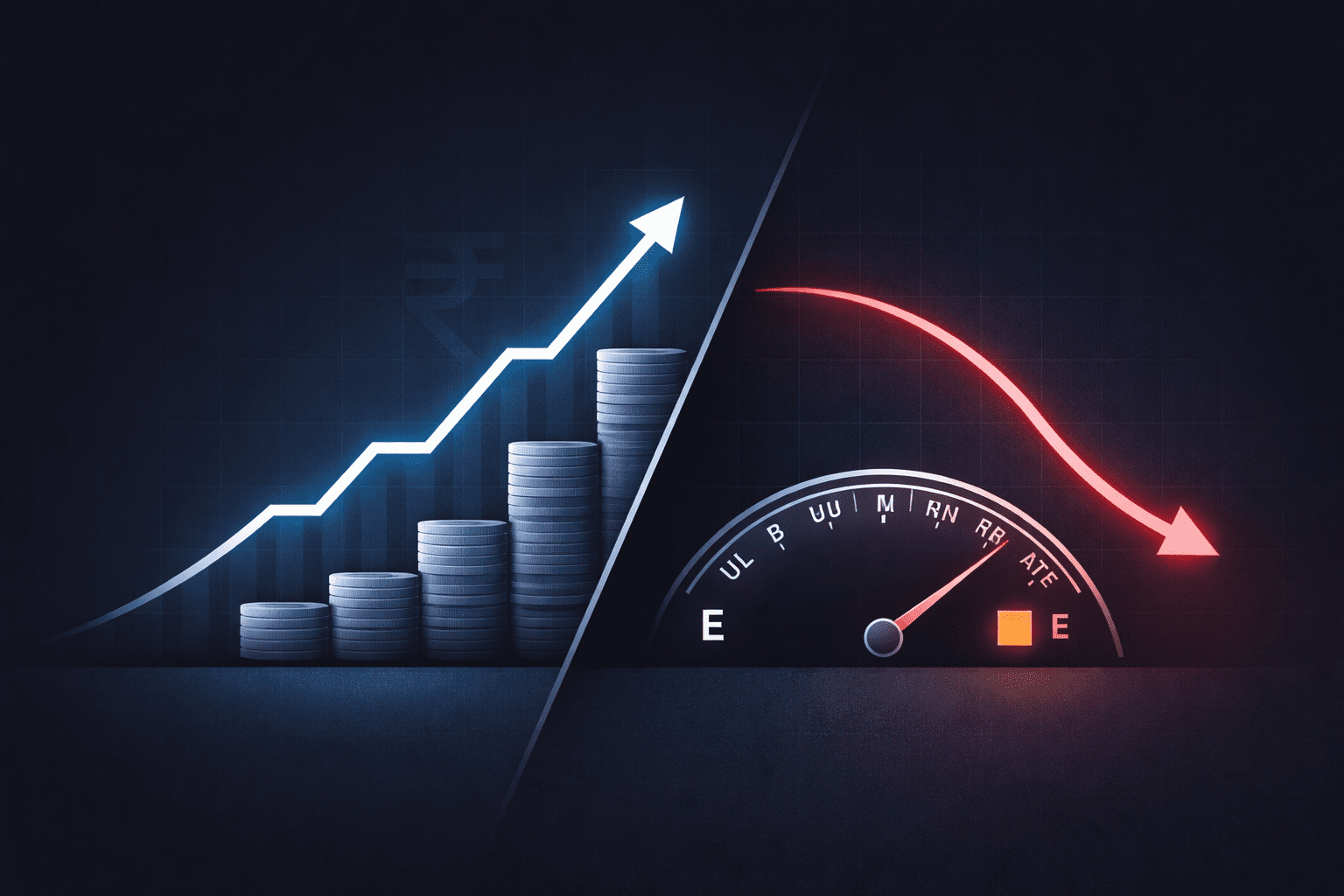
In the post-2022 funding environment, Indian startups can no longer afford to treat cash burn as a viable growth strategy. Investors today scrutinize capital efficiency just as carefully as top-line growth.
At the center of this change is one metric many founders still misunderstand: burn multiple.
Getting it right can help you extend your runway and build investor confidence. Getting it wrong has already contributed to painful resets. Here’s a clear explanation with 2026 benchmarks and a practical framework you can apply immediately.
What Is Burn Multiple? The Simple Formula
Burn Multiple = Net Burn ÷ Net New Revenue (or Net New ARR for SaaS businesses)
This metric tells you exactly how many rupees you are spending to generate one additional rupee of revenue. A lower number reflects more efficient growth.
2026 Benchmarks for Indian Startups:
- Excellent: Under 1.5x — signals strong capital efficiency and makes follow-on funding far more likely.
- Solid: 1.5x–2x — acceptable during high-growth phases when paired with strong retention and improving margins.
- Concerning: Above 3x — often indicates inefficiency; companies consistently above 4x faced major challenges in 2025.
The Core Mistake Most Founders Make
Burn multiple improves whenever revenue increases — even if that revenue comes from heavy discounts, cashbacks, or unsustainable paid acquisition. This creates a false sense of efficiency while hiding weak contribution margins and poor retention.
In India’s hyper-competitive consumer, edtech, and D2C sectors, many teams engineered short-term revenue spikes that looked good on paper but collapsed when subsidies were reduced.
Smart founders today always pair burn multiple with these supporting metrics:
- Contribution Margin: Revenue after variable costs (aim for positive and steadily improving).
- LTV:CAC Ratio: Target at least 3:1 for healthy payback.
- CAC Payback Period: Ideally under 12 months for most business models.
Kae Capital India VC 2025 Review & 2026 Outlook
Case Studies: What the Numbers Really Showed
Dunzo – High Volume, Fragile Unit Economics
Dunzo achieved strong brand recall in hyperlocal delivery but depended heavily on discounts and marketing spend. Revenue grew, yet thin contribution margins and low repeat usage without subsidies left the business vulnerable.
Monthly burn often exceeded ₹100 crore. When capital became scarce, the company shut down operations in early 2025 after repeated layoffs and significant investor write-downs.
Key Lesson: Burn multiple looked manageable while revenue was rising, but it masked deep weaknesses in unit economics.
Byju’s – Acquisition-Led Growth That Masked Inefficiency
Byju’s expanded aggressively through acquisitions, boosting reported revenue significantly. However, high sales and marketing costs plus integration challenges drove up burn without creating sustainable efficiency.
Once valued at ~$22 billion, the company faced governance issues, delayed reporting, cash flow stress, and major valuation markdowns by 2025–26.
Key Lesson: Burn multiple measured spend against reported growth — but failed to reveal whether that growth was durable.
Common Pattern Across EdTech and D2C
Many companies acquired users through deep discounts and incentives. Initial revenue looked impressive, but reducing those subsidies led to sharp drops in retention and revenue — causing the effective burn multiple to spike.
This pattern played a major role in the valuation resets seen across 2024–2025.
Actionable Framework: Diagnose and Improve Your Burn Multiple in 2026
- Calculate Accurately
Net burn = total operating expenses minus revenue. Use net new revenue/ARR and exclude one-time or churned items. - Segment Your Data
Break it down by customer cohort, acquisition channel (organic vs paid), and product line. Blended numbers often hide the real issues. - Combine With Other Metrics
Track contribution margin per cohort and net revenue retention (NRR). Aim for NRR above 100–110% in SaaS and consumer models. - Reduce Reliance on Paid Acquisition
Shift budget toward organic channels, community building, and referrals. Many efficient 2026 cohorts lowered CAC by 30%+ this way. - Prioritize Retention-Led Growth
Even a 5–10% improvement in retention can meaningfully improve your burn multiple without extra spending. - Set Stage-Appropriate Targets
Early-stage companies can tolerate higher multiples during explosive growth. From Series A onward, aim for sub-2x with clear improvement trends.
What Leading Indian Startups Are Doing Differently
Efficient teams in 2026 treat burn multiple as a decision-making tool rather than just a reporting metric. They focus on contribution margin, maintain disciplined cost control to extend runway (many now target 18–24+ months), and align team incentives with both efficiency and growth.
Related: Why Indian Startup Valuations Are Completely Out of Sync With Reality in 2026
Related: Why Indian SaaS Startups Are Failing in 2026 — Even After Adding AI
More than one-third of Indian startups shifted their focus toward profitability and longer runway in 2025 — a trend that continues strongly in 2026.
Final Takeaway
Burn multiple is not a flawed metric — but using it in isolation is. In 2026, the market increasingly rewards founders who look beyond the headline number and ensure the revenue behind it is high-quality and repeatable.
Calculate it regularly. Question your revenue assumptions. Build a business where growth and efficiency support each other instead of competing.
What is your current burn multiple, and what steps are you taking to improve it? Share your thoughts in the comments below.
VentureBrief — Cutting Through The Startup Noise