

Spend a few months in the Indian startup ecosystem and a clear pattern emerges.
A product takes off in the United States. It trends across X and LinkedIn. Within weeks, multiple Indian startups launch near-identical versions with minor tweaks and a familiar pitch: built for India.
Some raise funding. Most disappear quietly.
This cycle has repeated for years. In 2026, it is breaking down.
The problem is not copying itself. The problem is copying without understanding.
Copying Worked Before, But Only When It Was Adapted
Some of India’s biggest startup successes were inspired by global models.
Flipkart did not invent ecommerce. It adapted it. By introducing cash on delivery, it solved a trust gap that global players had ignored.
OYO did not invent budget hotels. It rebuilt the supply side for India’s fragmented and inconsistent market.
These were not copies. They were translations.
That distinction matters more than ever today.
The Illusion of Safety in Copying
Founders copy because it feels safer.
The model is already validated. Investors understand the comparison. There is a visible path to scale.
But this logic ignores a critical factor. Markets are not interchangeable.
India and the United States operate on fundamentally different user behavior.
- US users pay for convenience. Indian users optimise for value.
- US markets adopt early. Indian markets wait, compare, and verify.
- Subscription models scale easily in the US. In India, users constantly question pricing.
Copy the product without adapting to these realities and the result is predictable. A solution that does not fit the market.
Insight: Product market fit cannot be imported. It has to be rebuilt from scratch.
Recent Failures Expose the Pattern
The failures are no longer isolated. They are becoming a pattern.
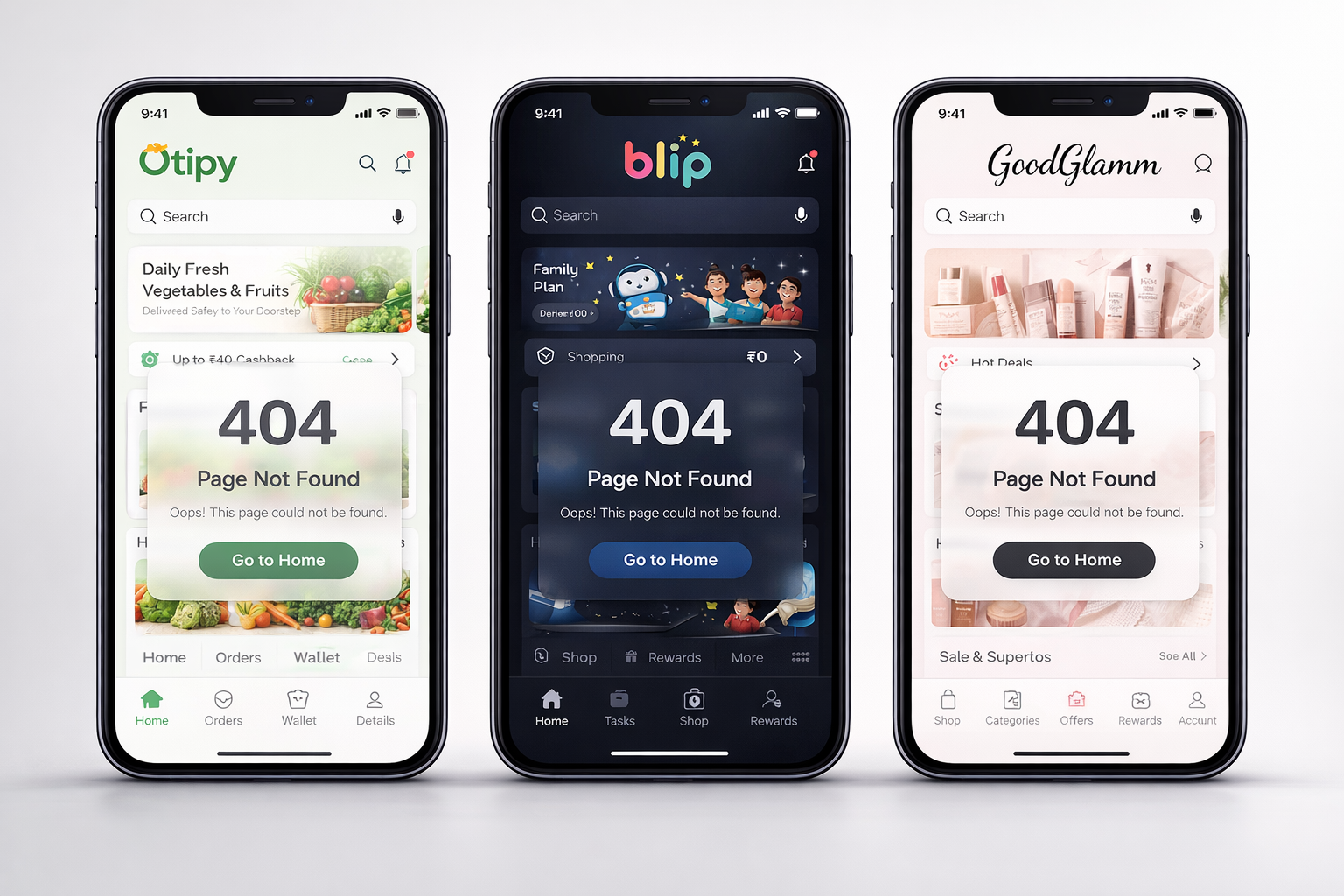
Otipy
A farm-to-fork subscription model inspired by global players. The concept looked strong on paper.
In practice, Indian consumers preferred local vendors offering fresher products without subscription commitments. The model collapsed under weak unit economics.
Blip
Positioned as quick commerce for fashion. Fast delivery, aggressive expansion, large inventory.
But fashion in India is not an impulse purchase. Users compare, browse, and return frequently. Logistics costs overwhelmed margins.
Good Glamm Group
An aggressive roll-up strategy inspired by global aggregators. Multiple acquisitions, rapid expansion, strong initial valuation.
The integration failed. Debt increased. Growth slowed. The model broke under pressure.
The pattern is consistent. Imported assumptions fail in a local context.
Where Adaptation Is Winning
Not all founders are making this mistake.
Zepto did not just copy quick commerce. It rebuilt logistics for dense Indian cities and small order sizes. It focused on how Indians actually shop daily.
Meesho reimagined social commerce for WhatsApp-driven resellers in smaller cities. It aligned with real distribution behavior instead of forcing a global model.
Razorpay did not replicate Stripe. It built for India’s complex compliance environment and evolving payments ecosystem.
These companies did not just copy ideas. They rebuilt them around local friction.
Insight: The winners are not copying features. They are redesigning systems.
Why Blind Copying Is Failing Faster in 2026
The environment has changed.
Users are more aware. Investors are more selective. Competition is more intense.
Three shifts stand out.
1. Users Recognise Weak Products Quickly
There is little tolerance for products that feel like inferior versions of global platforms.
2. Distribution Has Become the Real Moat
Features are easy to replicate. Building trust, community, and brand positioning is not.
3. Investors Are Rejecting Generic Models
The phrase “X for India” no longer excites. It raises questions about defensibility.
The Deeper Problem Founders Overlook
Blind copying creates a bigger issue than failed startups.
It weakens original thinking.
When founders focus on replicating existing products, they stop asking the most important question: what problem actually needs solving?
Instead, they chase speed and validation.
That shift leads to fragile businesses built on trends, not real demand.
A Smarter Way to Build in 2026
Inspiration is useful. Blind replication is not.
Before building, founders need to answer a few critical questions.
- What core problem does the original product solve
- How do Indian users behave around that problem
- What constraints exist in pricing, trust, and infrastructure
- What must change for the idea to succeed locally
The answers define whether a startup adapts or fails.
Execution should start small. Validation should be constant.
Build for real friction, not ideal conditions.
Final Thought
Copying is not the problem.
Blind copying is.
The founders who succeed in 2026 will not be the fastest imitators. They will be the ones who understand their users at a deeper level.
A startup does not succeed because it worked somewhere else.
It succeeds because it fits where it is built.
VentureBrief Insight: The Indian startup ecosystem is not lacking ideas. It is struggling with execution. Founders who move beyond imitation and build for real user behavior will define the next wave of successful companies.