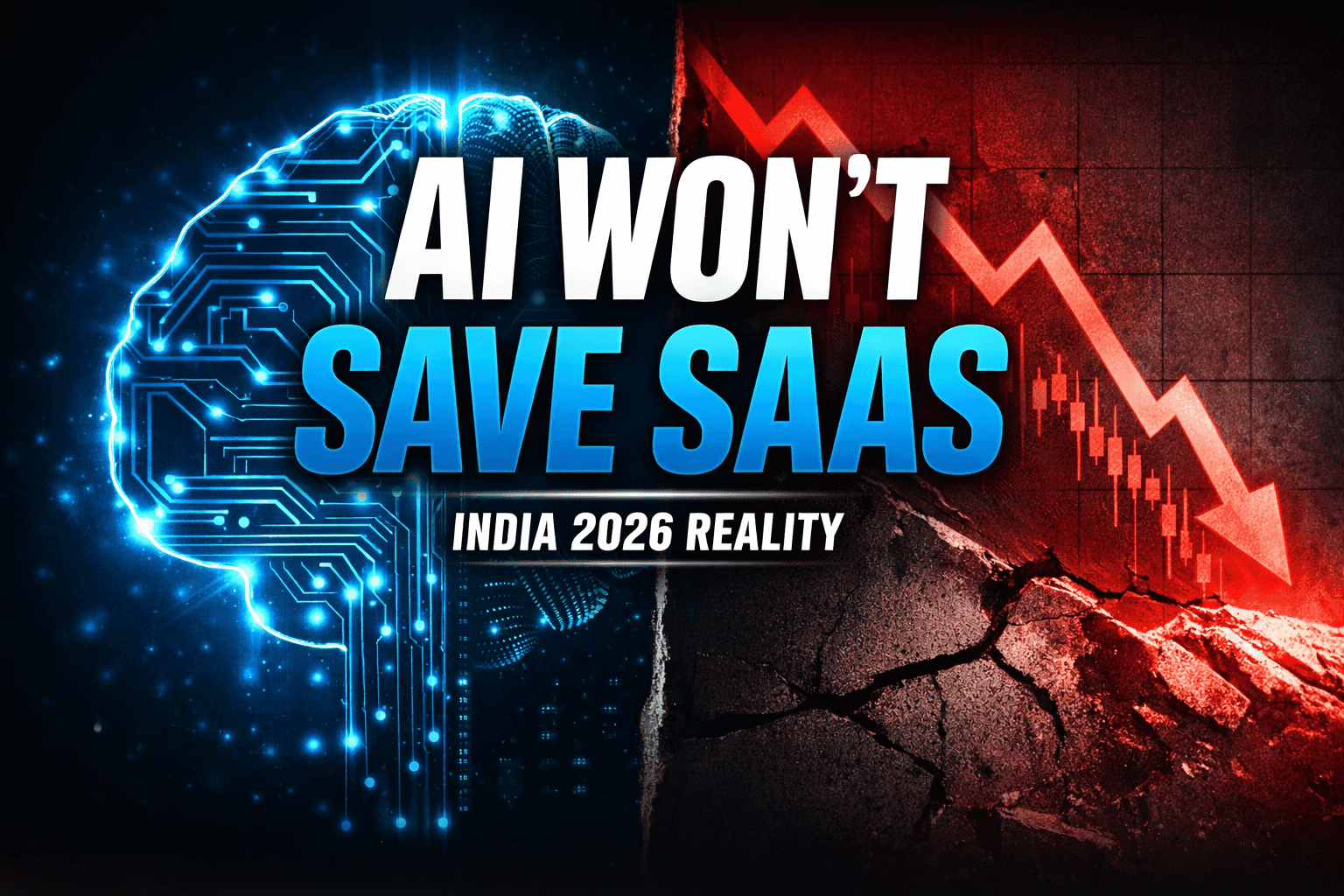
India’s SaaS ecosystem still looks strong from the outside.
New startups launch every month. Funding rounds continue, though smaller. Founders still talk about global scale.
But beneath that surface, something has clearly shifted.
In 2026, a growing number of Indian SaaS startups are not scaling. Some are slowing. Many are quietly struggling.
This is not a crash.
It is a correction that is exposing weak foundations.
The End of the Easy Growth Era
Between 2020 and 2022, SaaS startups operated in near-ideal conditions.
- Capital was easily available
- Investors rewarded growth over efficiency
- Acquisition costs were tolerated, even when unsustainable
Startups scaled fast. Burn was ignored. Metrics were often secondary to narrative.
That environment no longer exists.
In 2026, investors expect discipline. Growth must be efficient. Every number is questioned.
Many startups are now facing a hard reality.
They were built for a market that has disappeared.
Insight: Startups designed for abundance struggle the most when capital becomes selective.
AI Did Not Create an Edge, It Removed It
AI was expected to be the next big advantage for SaaS companies.
Instead, it has flattened differentiation.
Most startups today:
- Use similar foundation models
- Ship similar AI features
- Offer comparable user experiences
What once looked like innovation now looks standard.
AI has lowered the barrier to entry and increased the speed of competition.
Features that took months to build can now be replicated in weeks.
Insight: AI is not a moat. It is a multiplier. If the core product is weak, AI accelerates its failure.
Retention Is the Real Battlefield
For years, SaaS growth was driven by acquisition.
That model is breaking down.
Customer acquisition is now expensive and less predictable. What matters more is retention.
And this is where many startups are failing.
- Users sign up but do not stay
- Engagement drops after onboarding
- Expansion revenue remains weak
This leads to high churn.
Churn is silent, but it destroys businesses faster than slow growth.
Without retention, every new customer only replaces a lost one.
The Demo Looks Better Than the Product
AI has made demos more impressive than ever.
Products feel intelligent. Interfaces look polished. Early interactions are convincing.
But long-term value is often unclear.
Customers quickly ask simple questions:
- Does this save time?
- Does this increase revenue?
- Is this better than what I already use?
If the answer is not obvious, usage declines.
Customers do not pay for features. They pay for outcomes.
Without clear ROI, even well-built products become replaceable.
Unit Economics Are No Longer Optional
In 2026, fundamentals have returned to the center.
The key metrics now deciding survival include:
- Customer Acquisition Cost
- Lifetime Value
- Payback period
- Gross margins
Across the market, the pressure is visible.
- Paid acquisition costs are rising
- Conversion rates are declining
- Sales cycles are longer
This combination is difficult to manage without strong fundamentals.
Startups that ignored these metrics earlier are now paying the price.
Why Horizontal SaaS Is Losing Ground
Horizontal SaaS tools target broad use cases.
Examples include generic CRM systems, productivity tools, and analytics platforms.
These categories are now under pressure from multiple directions:
- Large companies bundling features into existing products
- New startups building faster and cheaper alternatives
- Customers reducing the number of tools they use
Without clear differentiation, these products become interchangeable.
And interchangeable products struggle to retain users.
Vertical SaaS Is Quietly Winning
While horizontal players struggle, vertical SaaS is gaining strength.
These startups focus on specific industries and workflows.
They offer:
- Deeper integration into daily operations
- Industry-specific solutions
- Higher switching costs
This depth creates defensibility.
And defensibility is what matters in a crowded market.
The Global Expansion Reality Check
Most Indian SaaS startups aim for global markets, especially the US and Europe.
But expansion is harder than it appears.
Common challenges include:
- Longer sales cycles
- Higher expectations for product quality and trust
- Complex enterprise buying processes
Many startups underestimate these barriers.
The result is slower growth and higher acquisition costs.
The Market Has Already Sent the Signal
Across the ecosystem, a pattern is emerging.
Even well-funded startups are:
- Struggling to sustain growth
- Facing retention issues
- Failing to justify their economics
This reinforces a simple truth.
Funding cannot fix weak fundamentals.
What Is Actually Working in 2026
The startups that are still growing are following a different playbook.
Retention First
They prioritise keeping customers over acquiring new ones.
Clear ROI
Their value is measurable and obvious.
Deep Integration
The product becomes essential to workflows.
Real Differentiation
They solve problems in ways competitors cannot easily replicate.
AI as an Enabler
They use AI to enhance the product, not define it.
The Real Reason Startups Are Failing
The issue is not AI.
It is not funding alone.
It is a mismatch between how startups were built and how the market now operates.
Startups were designed for:
- Fast growth
- Cheap capital
- Feature-led competition
The market now rewards:
- Efficiency
- Retention
- Clear value
This gap is forcing a reset across the ecosystem.
The Bottom Line
Indian SaaS is not collapsing.
It is evolving under pressure.
The companies that survive will not be the ones with the most features or the most funding.
They will be the ones that:
- Deliver real outcomes
- Retain customers consistently
- Operate with discipline
- Build defensible products
That is what defines a strong SaaS business in 2026.
VentureBrief Insight
The Indian SaaS ecosystem is moving from feature-driven growth to value-driven survival. AI has accelerated competition, not reduced it. The winners will not be those who adopt AI the fastest, but those who combine it with strong fundamentals, clear positioning, and deep customer value. In 2026, SaaS success is no longer about what you build. It is about what customers cannot replace.