Indian D2C brands are not failing because of lack of demand.
They are failing because demand is no longer enough.
For years, the model looked simple. Build a strong brand, run aggressive digital ads, scale fast, and raise capital to fuel growth. It worked in a low-cost, high-attention environment.
That environment is gone.
In 2026, the Indian D2C ecosystem is facing a structural reset. Growth has slowed, costs have surged, and customer loyalty remains fragile.
The result is a growing number of brands that look successful on the surface but struggle underneath.
Revenue Growth Is Slowing, Even for Strong Brands
Some of the most visible D2C names are already showing cracks.
SUGAR Cosmetics built strong early momentum through influencer-led marketing and bold branding. Revenue crossed ₹500 crore in FY24. A year later, it declined sharply, with losses widening and profitability turning negative.
This is not a one-off case. It reflects a broader trend.
Many D2C brands are discovering that scaling revenue is easier than sustaining it.
Insight: In D2C, early growth is often a marketing outcome. Sustained growth is a product and distribution outcome.
The Paid Marketing Trap
The biggest weakness in the D2C model is its dependence on paid acquisition.
Customer acquisition costs have risen sharply across platforms. Performance marketing is no longer cheap or predictable.
Brands that once scaled on Instagram and Meta ads are now facing declining returns.
- Higher cost per click
- Lower conversion rates
- Increasing competition for attention
Yet many brands continue to rely on the same playbook.
Spend more. Acquire more. Hope retention follows.
It rarely does.
Retention Is the Missing Layer
Most Indian D2C brands are built for acquisition, not retention.
Customers try the product once. They may even like it. But they do not come back consistently.
This creates a dangerous cycle.
Every new customer replaces a lost one. Growth becomes expensive and unstable.
Brands like Flipkart and Amazon have conditioned users to prioritise convenience, pricing, and delivery over brand loyalty. D2C players struggle to compete on all three.
Insight: Without retention, D2C is not a business. It is a marketing expense.
Distribution Is Still Controlled by Platforms
D2C promised independence from marketplaces.
That promise has not fully materialised.
Many brands still rely heavily on platforms like Flipkart and Amazon for scale. Others depend on quick commerce players like Zepto for last-mile delivery and visibility.
This creates a structural dependency.
Platforms control discovery. Platforms control pricing dynamics. Platforms control customer access.
Margins get compressed. Differentiation becomes harder.
Owning the customer relationship remains an unsolved problem.
Branding Without Depth Is Failing
Early D2C success was driven by branding.
Bold packaging. Influencer campaigns. Social media storytelling.
But branding alone is no longer enough.
Consumers now have too many choices. Switching costs are low. Alternatives are one click away.
Unless the product delivers consistent value, branding fades quickly.
This is where many brands are exposed.
They built attention. They did not build defensibility.
Unit Economics Are Under Pressure
The financial model is becoming harder to sustain.
Key pressures include:
- Rising customer acquisition costs
- Increasing logistics and delivery expenses
- Higher return rates
- Discount-driven competition
At the same time, investors are demanding better margins and clearer paths to profitability.
This creates a squeeze.
Growth slows. Costs rise. Margins shrink.
For many brands, the math no longer works.
Competition Is Fragmented and Relentless
Barriers to entry in D2C are low.
New brands launch quickly. Manufacturing is accessible. Distribution is digitised.
This leads to overcrowded categories.
In beauty, wellness, food, and apparel, dozens of brands compete for the same customer.
Standing out is harder than ever.
Staying relevant is even harder.
What Actually Works in 2026
The D2C brands that are still growing are not following the old playbook.
1. Strong Retention Engines
They focus on repeat purchases, subscriptions, and customer loyalty.
2. Product-Led Differentiation
The product solves a clear problem and delivers consistent value.
3. Multi-Channel Distribution
They balance their own channels with marketplaces and offline presence.
4. Cost Discipline
They manage CAC carefully and optimise logistics and operations.
5. Brand With Substance
Branding supports the product. It does not replace it.
The Bigger Shift
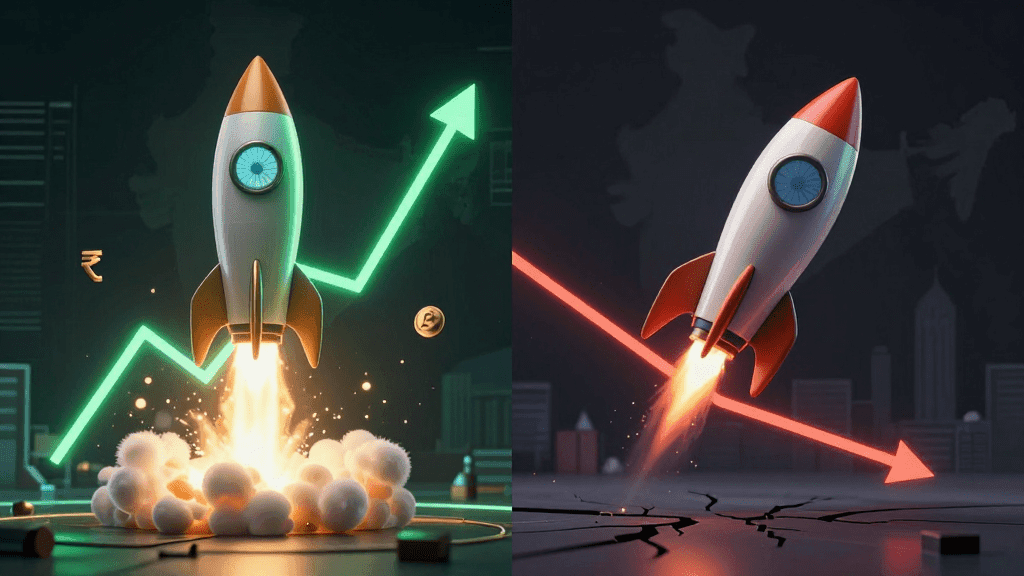
The D2C ecosystem is moving from hype-driven growth to fundamentals-driven survival.
Easy capital masked weak models. That phase is over.
Consumers are more selective. Platforms are more powerful. Costs are higher.
This is forcing a reset.
Some brands will adapt. Many will stagnate.
The Bottom Line
The real problem with Indian D2C brands is not competition or funding.
It is structural weakness in how these businesses were built.
Too much focus on acquisition. Too little focus on retention.
Too much emphasis on branding. Too little on product depth.
Too much dependence on platforms. Too little control over distribution.
In 2026, survival depends on fixing these fundamentals.
VentureBrief Insight
Indian D2C is entering a phase where brand alone is no longer a moat. The winners will not be the loudest or the fastest-growing, but the ones that build repeat demand, control distribution, and deliver consistent product value. In this market, attention can be bought, but loyalty must be earned.