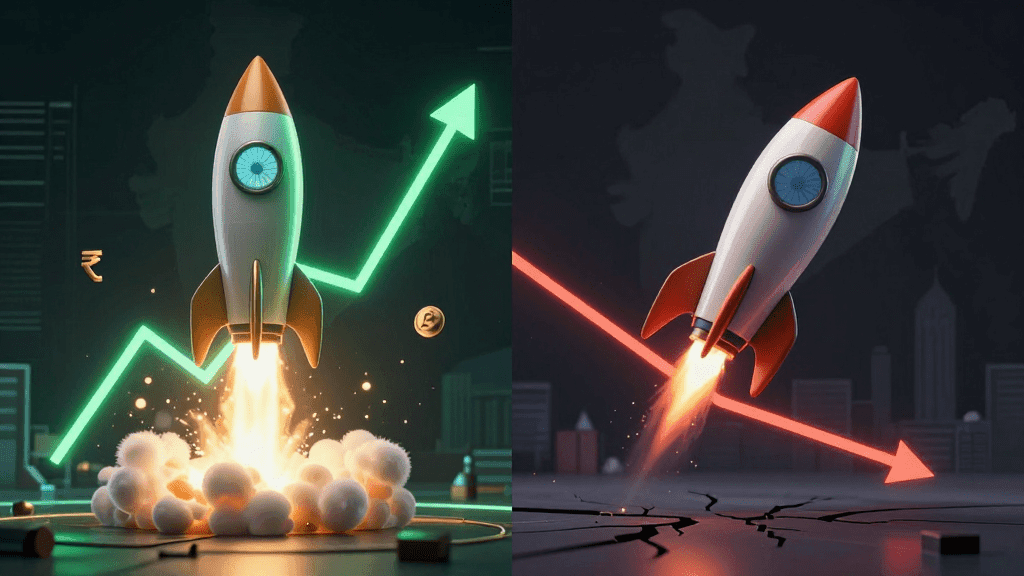

Indian deeptech startups are running into a hard reality in 2026.
The issue is not talent. It is not even capital.
It is structure.
Across Bengaluru, Hyderabad, and Delhi, a familiar pattern keeps repeating. Startups raise funding, build promising prototypes, and rely on Chinese components to move fast. The product works. Early traction looks real.
Then the market shifts.
Prices fall. Margins shrink. Supply becomes unstable. Customers switch.
What looked like innovation starts looking like dependency.
This is not a temporary setback. It is a systemic flaw in how many Indian deeptech startups are being built.
The Dependency Problem Most Founders Ignore
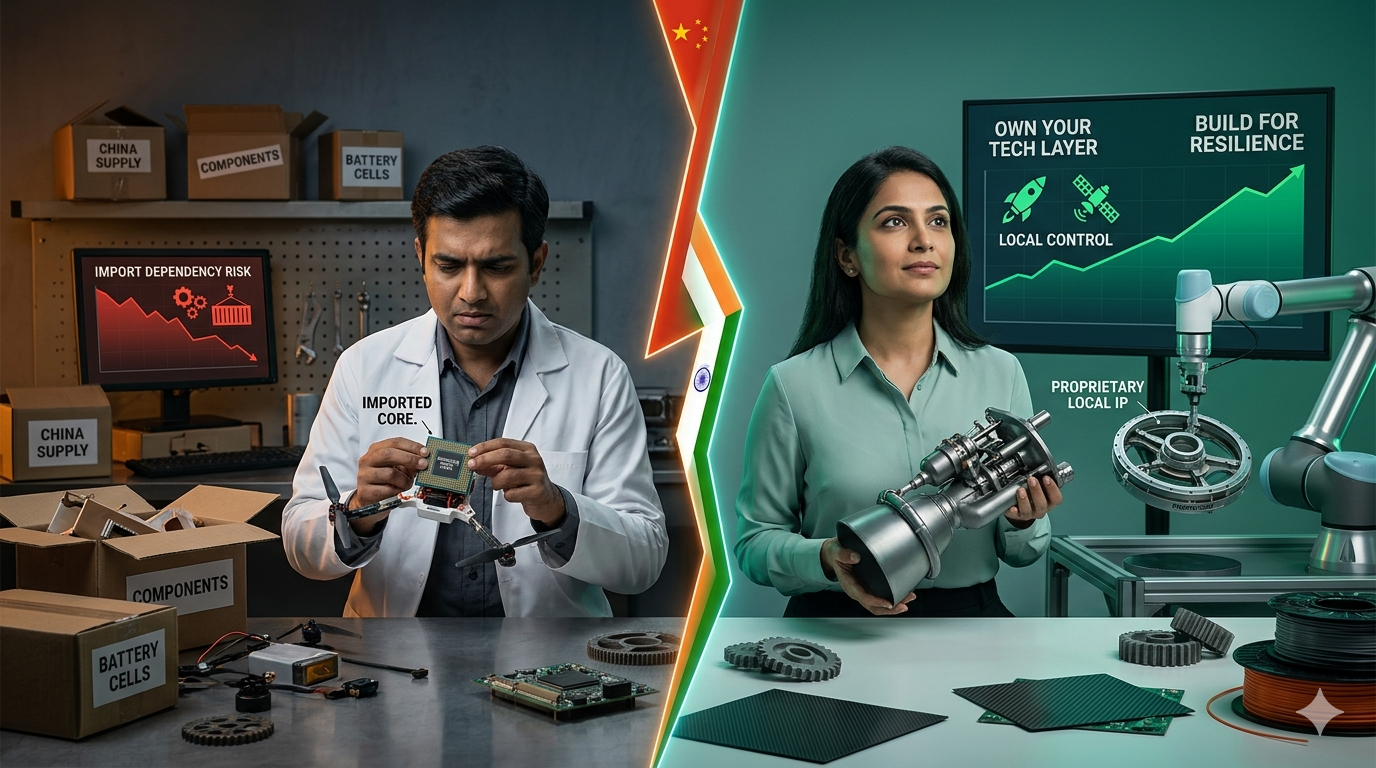
Many Indian deeptech startups are not truly manufacturing. They are assembling.
Critical inputs still come from China:
- Battery cells
- Semiconductors
- Electronic modules
- Precision manufacturing equipment
At an early stage, this approach looks efficient. It reduces cost and accelerates time to market. It also makes investor narratives cleaner.
But it creates a fragile foundation.
Control over cost is outsourced. Supply chain reliability is uncertain. Long-term competitiveness becomes questionable.
Insight: Speed built on dependency is not an advantage. It is delayed risk.
Why the Model Breaks at Scale
The strategy works, until it does not.
Chinese manufacturers operate at massive scale. When they push prices down, competitors relying on their components lose pricing power immediately.
Quality no longer needs to be superior. It only needs to be acceptable.
That is enough to win in price-sensitive markets like India.
At the same time, supply chains have become strategic tools. Delays, export controls, or cost fluctuations can disrupt entire business models.
Startups built on imported foundations are the first to feel the shock.
Case Study: Log9 Materials and the Limits of Local Ambition
Log9 Materials was positioned as one of India’s most promising EV battery startups.
The company raised significant funding and focused on alternative battery technologies. It aimed to build local capability in a sector dominated by global players.
But market realities were unforgiving.
- Chinese LFP batteries kept getting cheaper
- Cost parity remained out of reach
- Operational challenges increased
- Financial pressure intensified
By 2025, the company entered insolvency proceedings.
This was not an isolated failure. It highlighted a broader issue.
Local innovation cannot compete if cost structures remain globally uncompetitive.
The Structural Disadvantage India Faces
India’s deeptech ecosystem still depends heavily on imports for critical technologies:
- Semiconductors
- Advanced battery materials
- High-precision manufacturing systems
At the same time, the domestic market adds complexity.
- Customers are highly price-sensitive
- Infrastructure varies significantly
- Operating conditions are demanding
This creates a difficult balance.
Startups must compete globally on cost while adapting locally to constraints.
Few manage to do both.
Who Is Getting It Right
Some founders are approaching the problem differently.
Skyroot Aerospace
The company has focused on building proprietary propulsion systems rather than relying entirely on external suppliers. It is investing in local integration to maintain control over critical technology.
Agnikul Cosmos
By developing in-house 3D printed rocket engines, the company has reduced dependency on external manufacturing ecosystems and built a defensible advantage.
Emerging Defence Startups
Many defence and robotics startups are aligning with government procurement while building intellectual property locally. Their focus is not speed, but resilience.
These companies share one common approach. They control what matters.
Insight: In deeptech, owning the critical layer is more valuable than scaling the visible product.
Why 2026 Is a Turning Point
Several shifts are accelerating the pressure on import-dependent startups.
China’s Cost Advantage Is Expanding
Large-scale manufacturing continues to reduce global component prices.
India Is Pushing Localisation
Government policies increasingly favor domestic production and deeptech capabilities.
Investors Are Asking Harder Questions
Business models based purely on assembly are losing credibility.
Buyers Care About Supply Chains
Enterprises and government clients are prioritising reliability over cost alone.
These factors are exposing weak business models faster than before.
The Hidden Cost of Import Dependency
The biggest risk is not financial. It is strategic.
When startups rely heavily on imported components, their thinking shifts.
Instead of solving fundamental problems, they focus on assembling solutions quickly.
That mindset limits innovation.
And in deeptech, limited innovation leads to limited survival.
What Founders Need to Do Differently
Focus on Real Problems
Design products for India’s actual constraints, not ideal conditions.
Own the Critical Layer
Identify the part of the system that defines long-term advantage and build control around it.
Plan for Price Pressure
Assume that global competition will always reduce margins.
Leverage Policy Strategically
Use government incentives to build long-term capabilities, not short-term growth.
The Bottom Line
China’s manufacturing dominance is not disappearing.
But dependence on it is becoming a strategic risk.
The startups that succeed in 2026 will not be the fastest to launch.
They will be the ones that build control into their systems from the start.
In deeptech, speed attracts attention.
Control determines survival.
VentureBrief Insight
Indian deeptech is entering a phase where imitation and assembly are no longer enough. The next generation of winners will be defined by how deeply they control technology, supply chains, and cost structures. Founders who recognise this shift early are not just building companies. They are building long-term strategic advantage.